

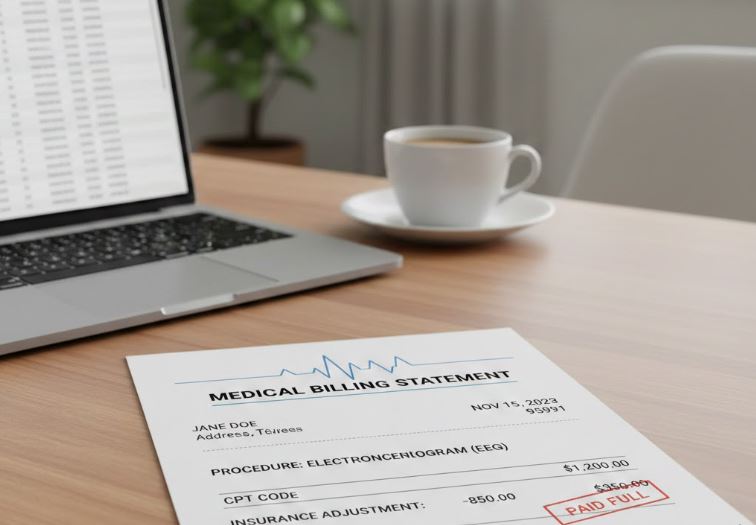
Diagnosis and billing are integral parts of any medical speciality that cannot provide satisfactory results without precise handling. Neurology services cover multiple diagnostic processes to monitor better mental health. EEG is one of the diagnostic tests. It uses electrode discs to monitor the electrical activity of brain cells. Specialists use this test to identify major neurological disorders. Due to the indispensable clinical value of EEG, their billing practices should be error-free and compliant.
An accurate and thoughtful billing claims escalation boosts financial stability by ensuring fair reimbursement. However, getting perfection in billing claims is difficult, demanding efficient navigation through coding and insurance verification. Practices face several challenges with EEGs billing, such as accurate coding with correct modifiers and timely claims submission. This article covers all possible aspects of EEG billing for neurology services, highlighting important modifiers to remember, common committed mistakes, and best practices to stay safe.
Understanding EEG Billing & CPT Codes
What is EEG Billing?
EEG billing covers all the steps and processes a billing team performs to submit a compliant claim and successful reimbursement for an electroencephalogram test. EEGs are highly critical tools due to their electrical characteristics and complex use. Therefore, billing teams need additional care while applying CPT codes for EEG. The billing process for neurology EEG does not end with simple diagnosis but imposes several further challenges when the test is performed partially or more than once for an accurate report.
In this case, small codes (modifiers) support CPT codes for clear explanations. EEG can diversify its duration from short to prolonged monitoring in complex mental states. A billing practice selects the correct CPT code for complicated tests, prepares all required medical documents to prove the test’s necessity, and applies modifiers for incomplete services. All these steps work collectively to give a healthy cash flow for neurology practices.
Key CPT Codes for EEGs
Here is the list of most commonly used CPT codes that help in successful reimbursement for routine tests or long-term follow-ups:
95812 – Routine EEG, less than 24 hours
This specific code is used for patients who receive their EEG diagnosis service in an outpatient setting. Such tests usually last less than 24 hours, so a claim request is also submitted for the party day.
95813 – Routine EEG, more than 41 minutes
In critical neurology disorders, professionals follow a lengthy procedure for more than 41 minutes. This test monitors the brain cells for a long time to prepare a better care plan.
95816 – Routine EEG, 20–40 minutes
The code mentioned is mainly used in neurology EEG because it covers routine checkups that end in 20-40 minutes, and the patient stays conscious. It is the most frequently used code because neurologists perform it initially after finding the physical symptoms of neurological disorders.
95819 – Routine EEG, awake and asleep monitoring
The code applies when EEG is performed in a single session, but the patient is awake and asleep. The test in both conditions helps to monitor the cells’ activity in the sleeping condition and their difference from the waking state. Such a test is essential to detect epilepsy and sleeping disorders.
95822 – EEG performed on a patient in a coma or asleep
This code applies when an EEG is performed for coma patients or when an individual stays asleep throughout the test. Critically brain-injured or unconscious patients are treated through this detailed EEG, such as those admitted to the ICU or emergency settings.
Modifiers Used in EEG Billing
Neurology services demand interaction with multiple professionals, so a single CPT code cannot define reimbursement. Short two-digit codes help to explain who performed what part of patient care and whether the service is completed, stopped, or altered with more valuable options according to the patient’s recovery state. Most commonly used modifiers are as follows:
Modifier 26 (Professional Component)
The modifier applies if only the professional part of neurology is used, such as a neurologist interpreting the need for an EEG or providing a report as a reference for conducting the diagnostic test.
Modifier 52 (Reduced Services)
This modifier is used when an EEG procedure is started, but the technician has to stop it due to the patient’s lower tolerance. The service can also be partial due to clinical findings.
Modifier 95 (Telemedicine Services)
The modifier indicated that the patient consulted the results of performing an EEG through real-time audio or video communication with professionals. Due to the growing adoption of telehealth, modifier 95 has significant value.
Best Practices for EEG Billing
Although the billing process for EEG services is complicated, some consistent and thoughtful strategies can simplify the whole process. A few of them are as follows:
Ensuring Accurate Documentation
Clear and detailed documents are the first step in compliant billing claims in EEG reimbursement. In these documents, a practice should prepare records for physical neurological symptoms in patients further indicated for an EEG test. The date, time, and duration of the procedure are also essential to record to prepare a detailed document that prevents claim denials and unexpected audits.
Avoiding Common Coding Errors
EEG billing covers a wide range of codes and their modifiers, so a misinterpreted code is a common mistake in a claim. Sometimes, the billing team forgets to apply a modifier or mentions it for irrelevant reasons. All such pitfalls lead to denials; therefore, practices must train their staff for frequent internal audits.
Verifying Insurance Coverage & Pre-Authorization
In some cases, claims still face denial after having all the supporting documents and accurate coding. This occurs due to neglecting insurance verification and prior authorisation approval. Providers must ensure insurance coverage and communicate with payers before performing EEG tests, which can prevent later billing disputes.
Compliance with Medicare & Private Payer Guidelines
Medicare and private insurers can differ in their insurance rules, and their requirements for EEG billing can also be diverse. EEG providers must have updated knowledge about all payer guidelines, which helps manage records accordingly.
Using Electronic Health Records (EHR) for Efficiency
Manual handling in billing claims has a high chance of committing coding mistakes. Hence, practices should prefer EHR systems. These technology-based platforms offer auto-filling for CPT codes and detect errors in claims more efficiently.
Tools & Resources for EEG Billing
Knowing the correct codes and billing documentation is not enough for successful reimbursement; practices should know the latest tools and resources to stay ahead. A few valuable ideas are as follows:
Top EEG Billing Software
Automating and streamlining the EEG can save from manual errors, so practices must integrate their operation with modern EHR systems. For example, EpicCare EMR is a robust option for preparing neurology templates and auto-filling CPT codes. AdvancedMD is also the best, offering customisable and efficient neurology billing features with smart detection in billing claims. NextGen Healthcare helps reduce compliance errors while providing real-time knowledge about payer-specific demands.
Industry-Recognized Coding References
CPT codes and payer guidelines evolve suddenly, and their negligence can lead to potential financial loss. Neurology practices should stay updated with all minor to significant changes in coding criteria or documentation requirements. CPT code books published by the AMA can provide more accurate knowledge about this context. Billing teams must follow the guidelines issued by ICD-10, helping to stay compliant and avoid denials. Considering CMS regulations in detail also saves from sudden mistakes.
Neurology Billing Compliance Guidelines
Medicare and Medicaid guidelines for neurology services can differ, so practices should continually evaluate the patient’s insurance policy to understand the payer requirements. Thus, advance confirmation saves from later complications and helps maintain the record or apply the codes according to insurance providers’ instructions.
Training & Certification Programs
Due to the evolving nature of CPT codes and documentation requirements for EEG neurology billing, practices should invest in formal education and employee certification. This ongoing development helps staff understand the latest requirements and enables them to handle complex billing claims more efficiently. Getting a CPC certificate from AAPC or compliance training from AHIMA can polish the billing claim handling skills.
Final Analysis
This test guides neurologists in evaluating the actual stage of a neurology disorder that a patient’s physical examination cannot monitor. These EEG tests demand complicated tools and technology. Therefore, their billing claims are also not straightforward to fill in single settings. Service providers deal with numerous challenges and patients’ physical conditions. EEG demands an efficient billing handling for proper reimbursement of service providers, and it is possible only with thorough documentation and error-free coding.


